





Tree nurseries, seedlings, sustainable farming and KEFRI Patnerships.
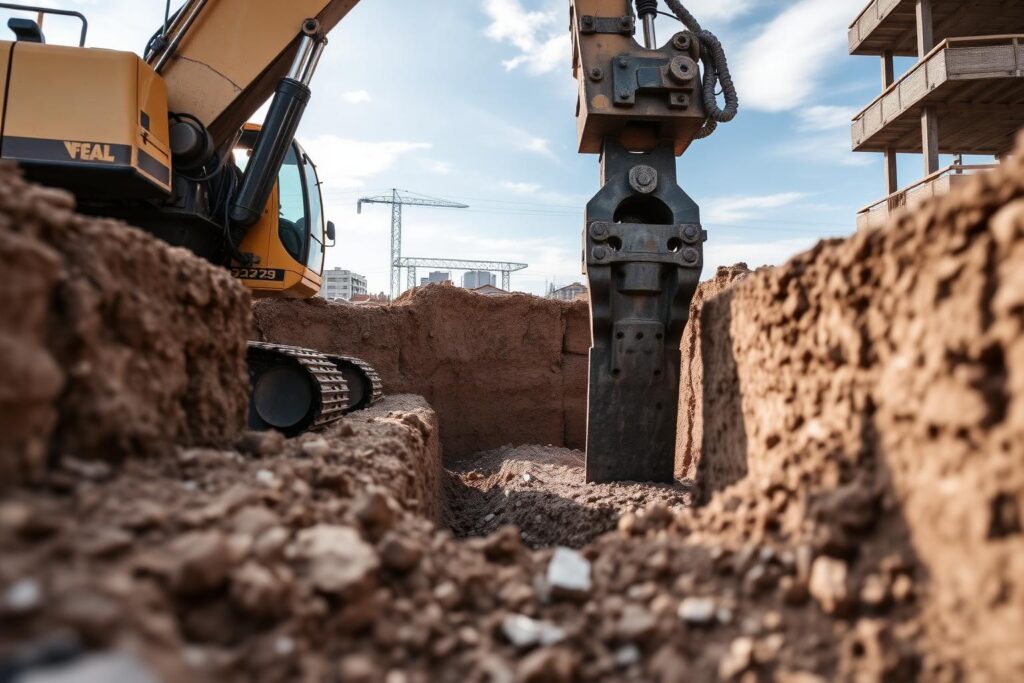
JALI ECOSYSTEMS LIMITED.
Kenya’s Trusted Partner in NEMA-Licensed Asbestos Removal, Civil Engineering, Water Treatment & Agroforestry Solutions — Delivering Safety, Sustainability & Results Across Nairobi and Beyond.
About Company
ABOUT US.
Jali Ecosystems Limited is a Nairobi-based, performance-driven company delivering end-to-end solutions across four critical domains: Asbestos Management, Civil & Structural Engineering, Water Treatment & Delivery, and Agroforestry. We are fully licensed by the National Environment Management Authority (NEMA) and registered with the National Construction Authority (NCA — Category NCA5, Reg. 70798/B/1021).
From safe asbestos roof removal and disposal, to water borehole treatment, civil works, and tree nursery partnerships with KEFRI, we scope clearly, control quality rigorously, and execute with speed and budget discipline. HSE compliance is non-negotiable — our documentation, site controls, and project reporting stand up to full regulatory scrutiny.
Whether you’re a property owner, developer, county government, or institution, Jali Ecosystems gives you the expertise and certifications to handle your project safely, legally, and on time.
- Asbestos removal.
- Water.
- Engineering.
- Agroforestry.

Work with us Today.
Ready to Start Your Next Project in Kenya? Whether it’s asbestos removal, a construction project, water treatment, or a reforestation initiative, Jali Ecosystems Limited has the license, the team, and the track record. Let’s talk.
Selected Projects
Our Showcase
Vision
To be a global leader in the provision of Asbestsos, Engineering, Water & Agroforestry Solutions recognized for our commitment to quality, sustainability, and customer satisfaction.
Mission
To provide high-quality, innovative, and sustainable Asbestos, engineering, Water and Agroforestry solutions management, contributing to Kenya’s infrastructural growth while ensuring environmental responsibility.
Sustainability
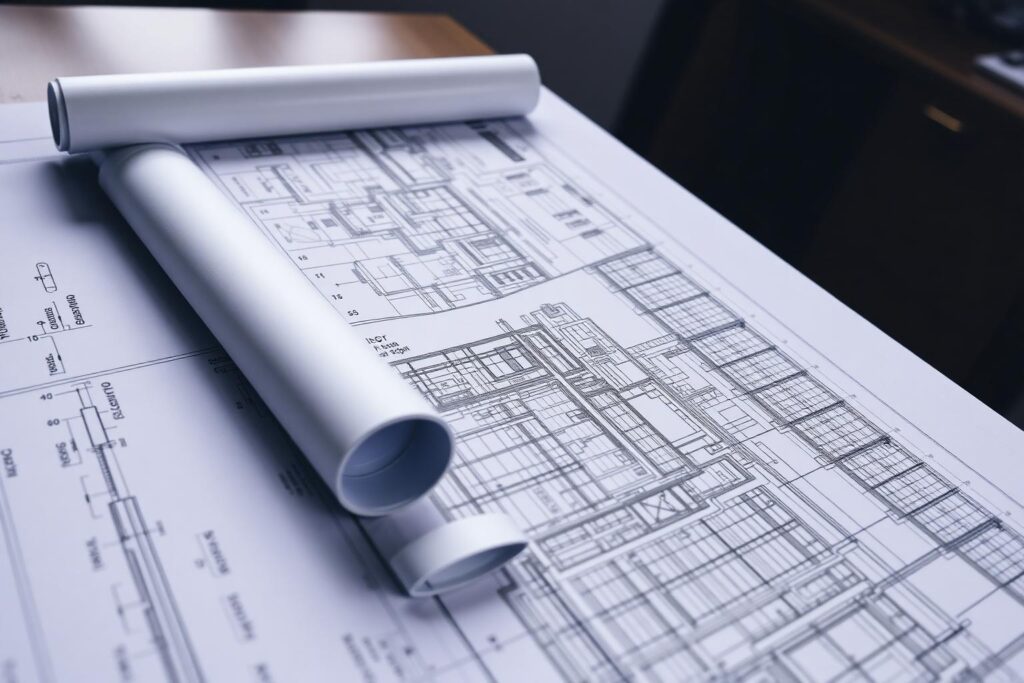
We care about the quality of life and involve the neighbouring community in improving the environment for sustainable development.
Safety
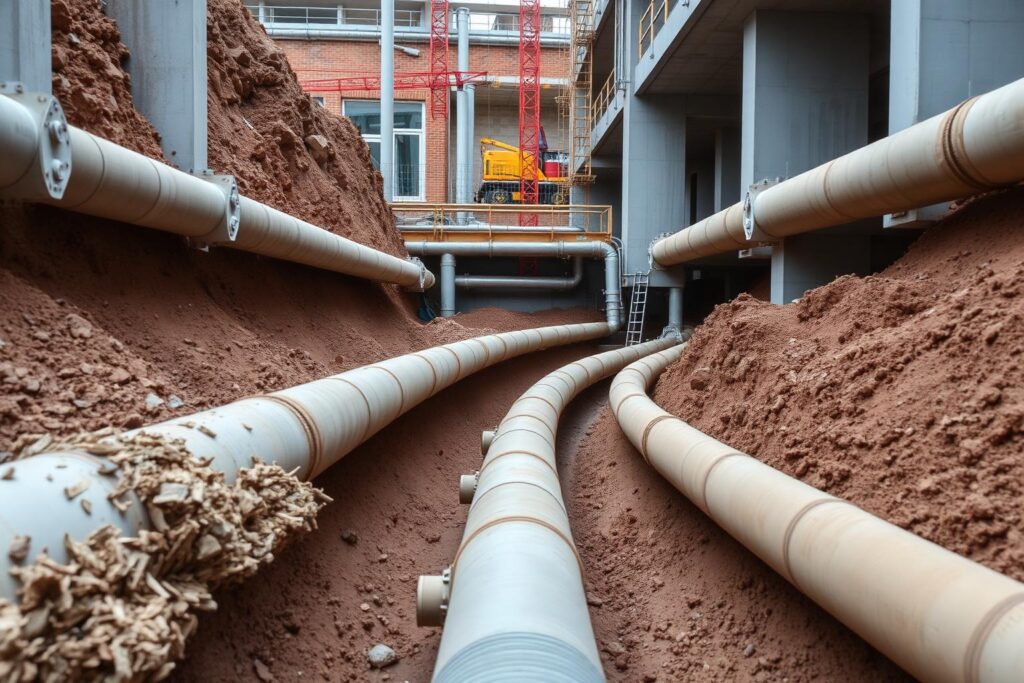
We uphold the highest safety standards to protect our employees, clients, and communities.
Reliability and accountability
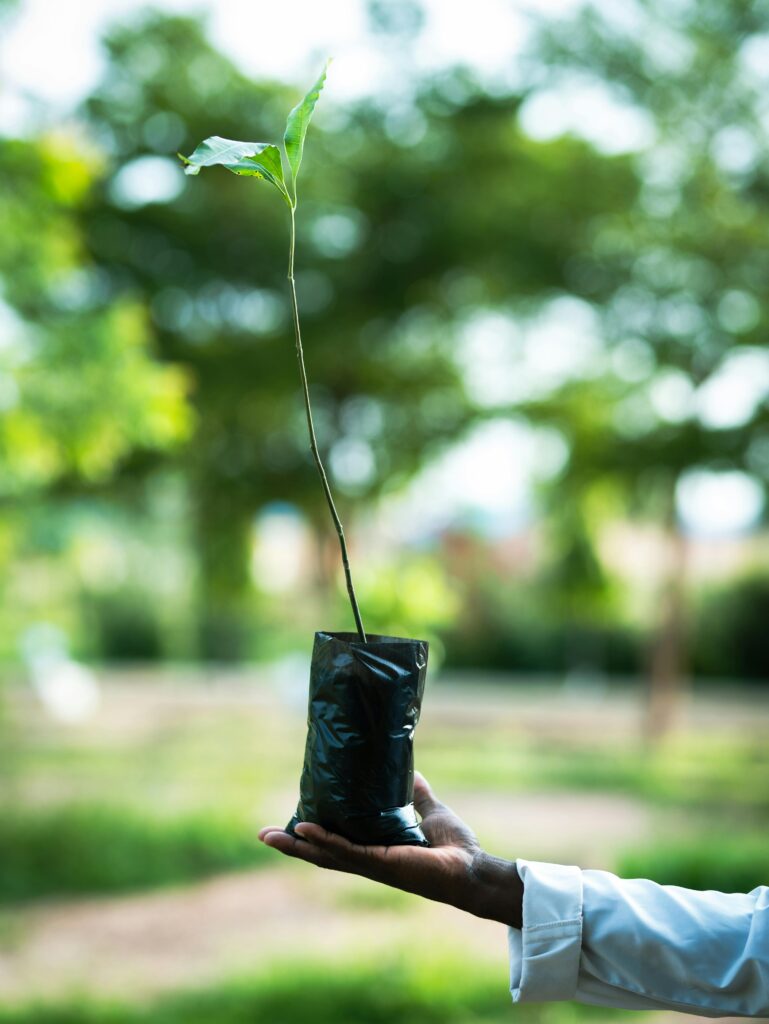
Business practice of doing the right thing in a reliable way defines our practice.
Innovation
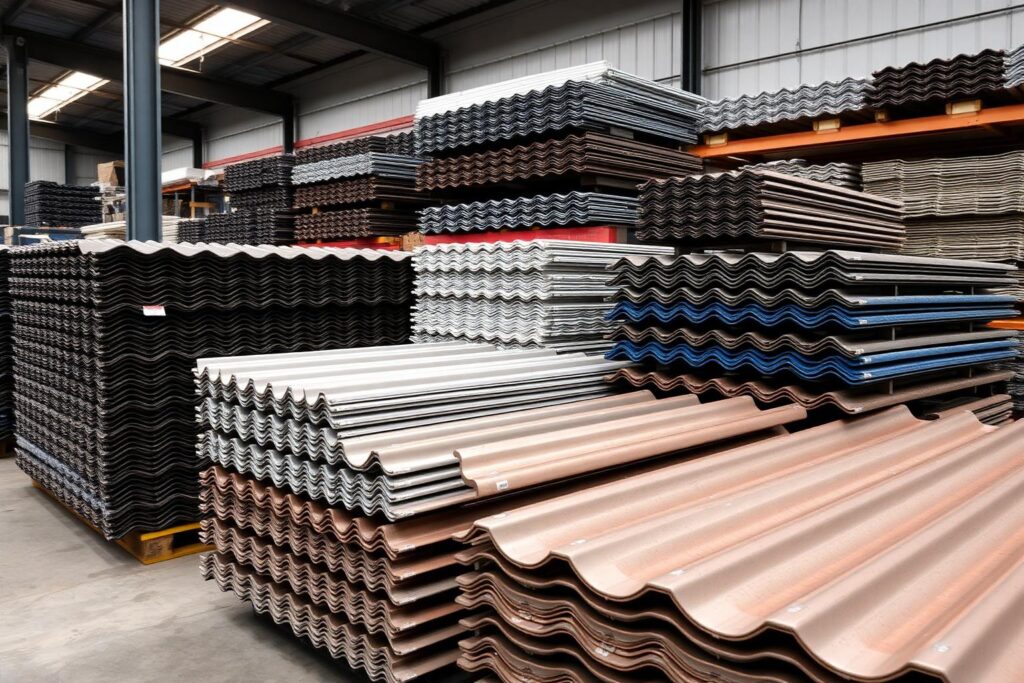
We embrace new technologies and engineering methods to improve efficiency and sustainability.
BLOG

What is Asbestos? Kenya’s NEMA Regulations, Health Risks & Safe Removal Guide (2025)?
Asbestos is a naturally occurring mineral that was once lauded for its versatility, recognized for its heat resistance, tensile strength and insulating properties. It was used for various applications from fire-proof vests to home and commercial construction.
Read More
By Jali Ecosystems Limited | Published: 2025 | Reading Time: 8 Minutes
NEMA-Licensed Asbestos Removal Contractors — Nairobi, Kenya
Thousands of homes, schools, churches, and commercial buildings across Kenya still have asbestos roofs overhead. Many owners are unaware of the risks — or confused about what the law requires them to do.
This guide covers everything you need to know: what asbestos is, why it’s dangerous, what Kenya’s NEMA regulations say, and how to remove it safely and legally in 2025.
Table of Contents
- What is Asbestos?
- Why Was Asbestos Used in Kenya?
- Health Risks of Asbestos Exposure
- NEMA Regulations on Asbestos in Kenya (2025)
- How to Identify Asbestos in Your Property
- The Safe Asbestos Removal Process in Kenya
- Asbestos Disposal: What the Law Requires
- How Much Does Asbestos Removal Cost in Kenya?
- Why You Must Hire a NEMA-Licensed Contractor
- Contact Jali Ecosystems for Safe Asbestos Removal
1. What is Asbestos?
Asbestos is a group of naturally occurring silicate minerals made up of long, thin, microscopic fibres. It was once considered a wonder material because of its remarkable properties:
- Heat resistance — it does not burn or melt easily
- Tensile strength — stronger than steel by weight
- Sound insulation — absorbs noise effectively
- Chemical resistance — unaffected by most acids and alkalis
- Low electrical conductivity — useful in electrical insulation
Because of these properties, asbestos was widely used in construction, manufacturing, and industrial applications throughout the 20th century. In Kenya — as in most of the developing world — it was woven into cement sheets to produce the corrugated roofing material commonly known as mabati ya zamani (old-style iron sheets) or asbestos cement (AC) sheets.
There are six types of asbestos, grouped into two families:
| Family | Types | Risk Level |
|---|---|---|
| Serpentine | Chrysotile (White Asbestos) | Moderate — most common in Kenya |
| Amphibole | Amosite (Brown), Crocidolite (Blue), Tremolite, Actinolite, Anthophyllite | High to Extreme |
Chrysotile is the type most commonly found in Kenyan buildings. While considered less aggressive than amphibole types, it is still classified as a Group 1 carcinogen by the World Health Organisation (WHO) — meaning it is confirmed to cause cancer in humans.
2. Why Was Asbestos Used in Kenya?
During Kenya’s post-independence building boom of the 1960s and 1970s, asbestos cement roofing sheets were the material of choice for construction across housing estates, government buildings, schools, hospitals, and factories. The reasons were straightforward:
- Affordability — significantly cheaper than steel or clay tiles at the time
- Durability — expected to last 30–50 years under normal conditions
- Ease of installation — lightweight and simple to cut and fix
- Wide availability — manufactured locally and imported at scale
The result: an estimated millions of square metres of asbestos roofing remain in place across Kenya today — in Nairobi estates like Eastlands, Mathare, Pangani, and Bahati; in schools and churches in rural counties; and in old industrial and commercial buildings throughout the country.
3. Health Risks of Asbestos Exposure
This is the most critical section of this guide. Understanding why asbestos is dangerous is the foundation for understanding why Kenya’s laws require its careful management.
How Asbestos Harms the Body
Asbestos fibres are invisible to the naked eye. When asbestos-containing materials (ACMs) are disturbed — by weathering, drilling, breaking, or demolition — they release microscopic fibres into the air. These fibres can remain airborne for hours and travel significant distances.
When inhaled, asbestos fibres lodge permanently in the lining of the lungs and other organs. The human body cannot break them down or expel them. Over years and decades, they cause progressive, irreversible damage.
Diseases Caused by Asbestos
Asbestosis
A chronic, progressive scarring of lung tissue caused by accumulated asbestos fibres. Symptoms include:
- Persistent dry cough
- Shortness of breath (worsening over time)
- Chest tightness and pain
- Clubbing of fingers (in advanced cases)
There is no cure. Management focuses on slowing progression and managing symptoms.
Lung Cancer
Asbestos exposure significantly increases the risk of lung cancer — particularly in combination with cigarette smoking. The risk multiplies when both factors are present.
Mesothelioma
Perhaps the most feared asbestos-related disease. Mesothelioma is a rare and aggressive cancer of the mesothelium — the thin lining surrounding the lungs, abdomen, and heart. It is almost exclusively caused by asbestos exposure and carries a very poor prognosis. Symptoms often appear 20 to 50 years after initial exposure, by which time the disease is typically advanced.
Pleural Plaques & Pleural Thickening
Non-cancerous scarring and thickening of the lining around the lungs, causing reduced lung capacity and breathlessness.
Key fact: There is NO safe level of asbestos exposure. Even a single significant exposure event can cause disease decades later.
4. NEMA Regulations on Asbestos in Kenya (2025)
Kenya’s legal framework around asbestos is anchored in the Environmental Management and Coordination Act (EMCA) and enforced by the National Environment Management Authority (NEMA). Here is what the law says:
2006 — NEMA Declares ACMs Hazardous Waste
The National Environment Management Authority officially classified Asbestos Containing Materials as hazardous waste under the Environmental Management and Coordination (Waste Management) Regulations, 2006. This means:
- ACMs must not be re-used, recovered, recycled, or offered for sale
- Handling, transport, and disposal of ACMs requires NEMA licensing
- Violations attract criminal penalties
2016 — NEMA Directive on Dilapidated Asbestos Roofs
In November 2016, NEMA issued a landmark directive requiring:
- All worn out, broken, or dilapidated asbestos roofs must be removed
- No rainwater should be collected from any asbestos roof — including those that appear intact
- Property owners are responsible for ensuring removal is carried out by licensed contractors
- Removed material must be disposed of at a NEMA-licensed asbestos disposal landfill
National Guidelines on Safe Management and Disposal of Asbestos
NEMA developed comprehensive national guidelines providing a step-by-step framework for:
- Asbestos surveys and risk assessment
- Preparation and delineation of the work area
- Personal Protective Equipment (PPE) requirements
- Removal and packaging procedures
- Decontamination protocols
- Transport requirements
- Disposal at licensed landfills
- Post-removal air monitoring and clearance certification
Penalties for Non-Compliance
Property owners who fail to remove deteriorating asbestos or who hire unlicensed contractors risk:
- Criminal prosecution under EMCA
- Substantial fines and remediation orders
- Liability for any health harm caused to occupants or neighbours
Bottom line: In Kenya, leaving a dilapidated asbestos roof in place — or removing it without a licensed contractor — is a criminal offence.
5. How to Identify Asbestos in Your Property
Not all old roofs contain asbestos. Here are the most reliable indicators:
Visual Clues
- Corrugated grey-white cement sheets (especially on buildings constructed before 1990)
- Flat smooth cement ceiling tiles or wall panels
- Old pipe insulation wrapped in grey or white material
- Textured spray coatings on ceilings or walls in older commercial buildings
Age of the Building
If your building was constructed between 1950 and 1990, there is a significant likelihood that asbestos-containing materials are present somewhere in the structure — roof, ceilings, walls, pipes, or floor tiles.
Warning Signs of Deterioration
- Cracking or crumbling roof sheets
- Chalky white powder around roof joins or on walls below the roofline
- Discolouration or moss growth on roof sheets
- Broken edges on roofing panels
⚠️ Do not touch, drill, or break suspect materials yourself. The only way to confirm asbestos is through professional sampling and laboratory analysis. Contact a licensed contractor for an inspection.
6. The Safe Asbestos Removal Process in Kenya
Safe asbestos removal is a regulated, multi-stage process. Here is what a compliant removal job looks like when carried out by a NEMA-licensed contractor like Jali Ecosystems Limited:
Stage 1: Site Survey & Risk Assessment
A qualified asbestos surveyor visits the property, inspects the materials, takes samples (where necessary), and produces a written Asbestos Survey Report documenting:
- Location and extent of ACMs
- Condition and risk rating of each material
- Recommended action (removal, encapsulation, or monitoring)
Stage 2: Work Plan & NEMA Notification
The contractor prepares a detailed Asbestos Removal Work Plan and notifies NEMA as required. A designated NEMA-licensed disposal landfill is confirmed.
Stage 3: Site Preparation
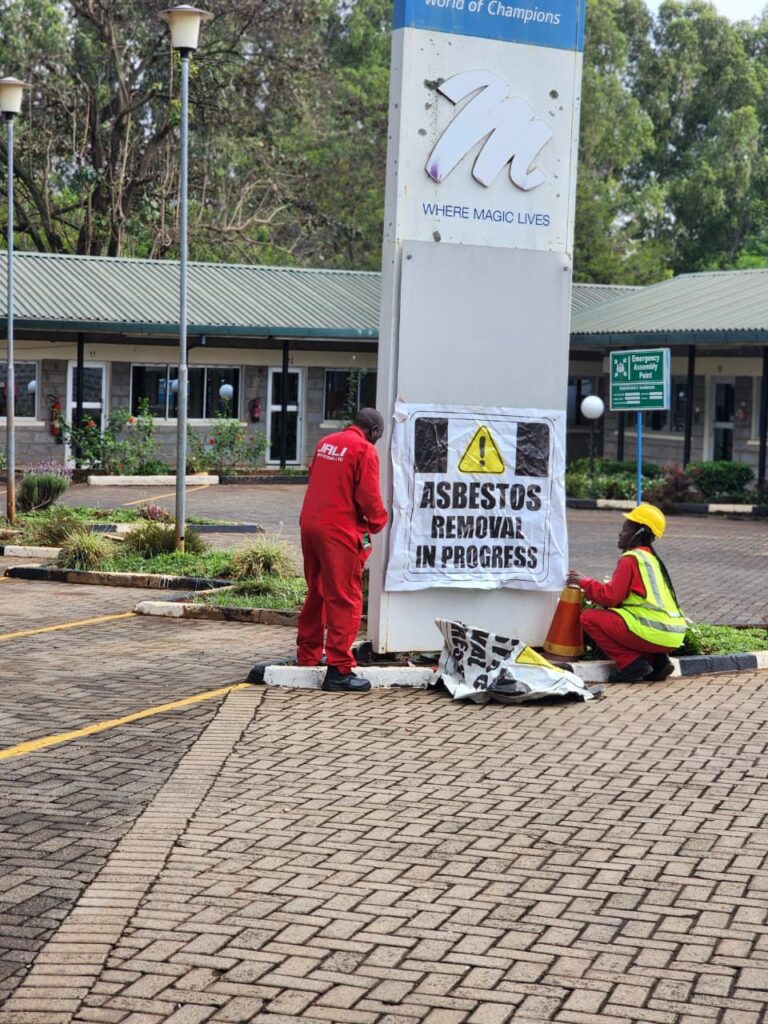
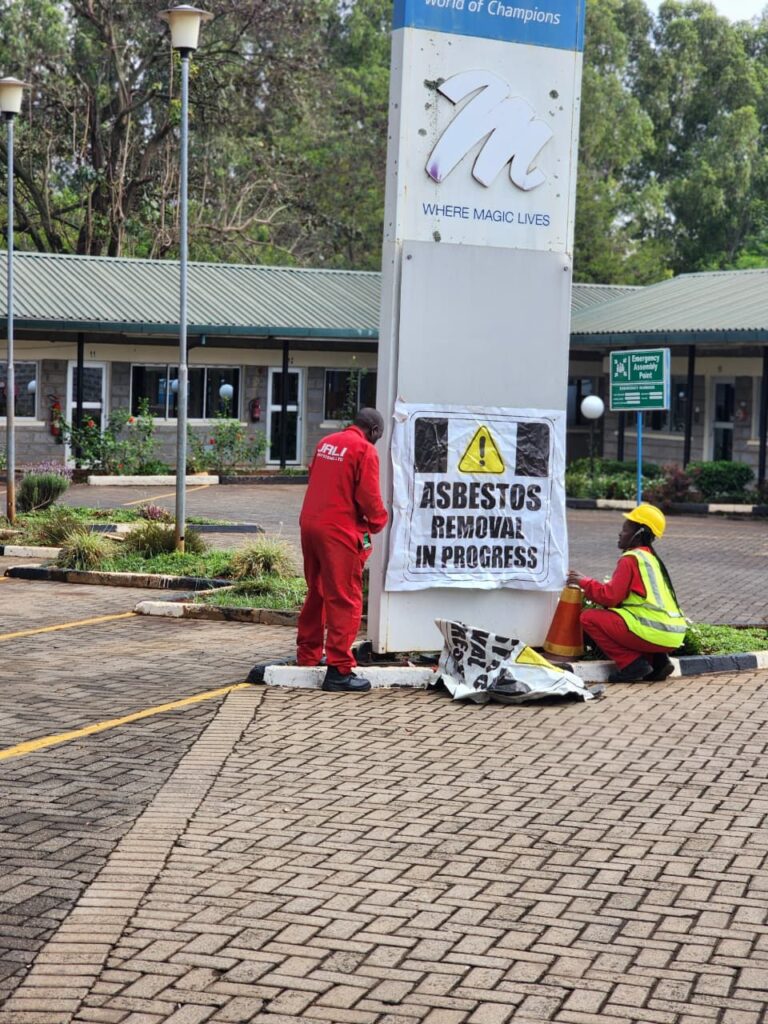
- Area is cordoned off and access restricted to authorised personnel only
- Warning signs and barriers are erected
- Plastic sheeting is used to contain the work zone
- Nearby surfaces are covered to prevent fibre contamination
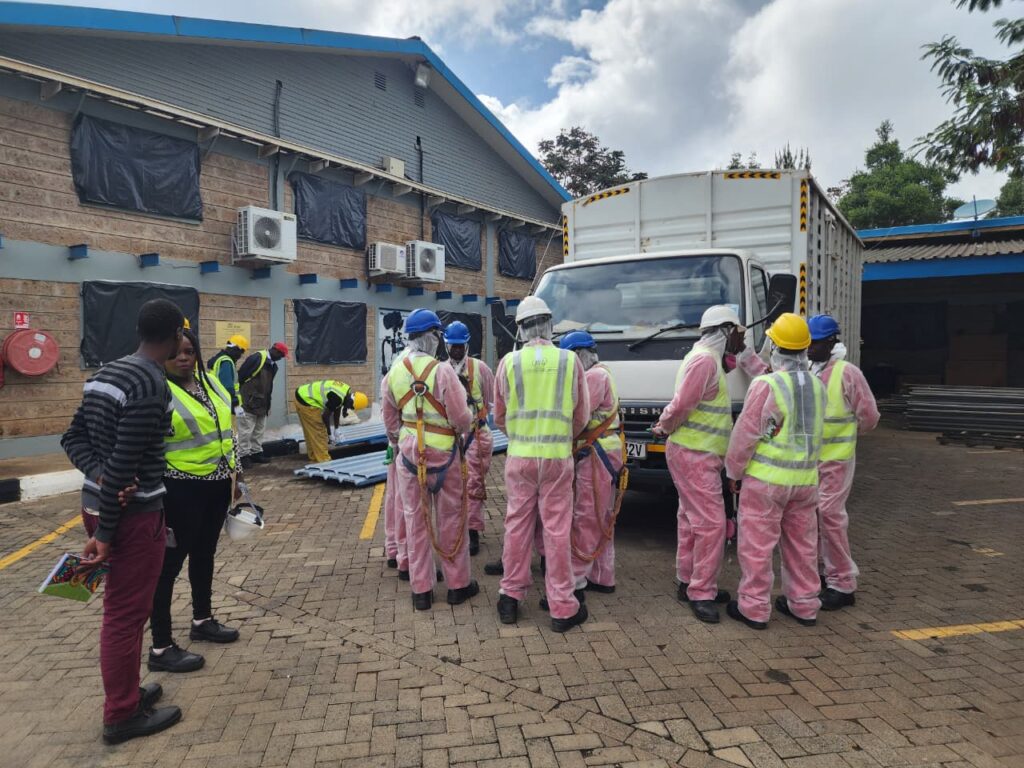
Stage 4: Personal Protective Equipment (PPE)
All workers must be equipped with:
- Full-face respirators with P3/HEPA filters
- Disposable Tyvek coveralls (Type 5/6)
- Gloves, boot covers, and eye protection
- Disposable footwear or dedicated site boots
Stage 5: Controlled Removal
- ACMs are wetted down using water or a wetting agent before removal — this suppresses fibre release
- Materials are removed carefully, avoiding breakage wherever possible
- No power tools (angle grinders, drills) are used on ACMs
- Broken pieces are immediately double-bagged
Stage 6: Packaging & Labelling
- All removed ACM waste is double-wrapped in heavy-gauge polythene
- Each package is labelled with the asbestos warning symbol and details
- Labelling must comply with NEMA transport and waste labelling requirements
Stage 7: Decontamination
- Workers decontaminate themselves using a three-stage decontamination unit before leaving the work area
- Disposable PPE is treated as asbestos waste and packaged accordingly
- The work area is wet-wiped and vacuumed using HEPA-filtered equipment
Stage 8: Transport to Licensed Landfill
Packaged asbestos waste is transported in a sealed vehicle to a NEMA-licensed asbestos disposal landfill. A Waste Transfer Note documenting the chain of custody is completed.
Stage 9: Post-Removal Air Monitoring & Clearance Certificate
After removal, air monitoring is conducted to confirm fibre levels are below the clearance threshold. A Clearance Certificate is issued — your legal documentation that the removal was completed to the required standard.
7. Asbestos Disposal: What the Law Requires
Under NEMA regulations, asbestos waste must only be disposed of at a NEMA-licensed asbestos disposal landfill. This is non-negotiable.
What is NOT acceptable disposal:
- ❌ Dumping in open land or river valleys
- ❌ Leaving on roadsides or in communal waste skips
- ❌ Mixing with general construction debris
- ❌ Burning (burning asbestos releases concentrated fibres and toxic gases)
- ❌ Burying on private land without NEMA approval
- ❌ Selling or giving away for re-use
What IS required:
- ✅ Double-bagging in heavy polythene, clearly labelled
- ✅ Transport by a NEMA-licensed waste transporter
- ✅ Delivery to a NEMA-licensed asbestos landfill
- ✅ A Waste Transfer Note documenting disposal
Jali Ecosystems handles the full chain of custody — from removal through to licensed landfill disposal — so you have complete documentation and zero liability.
8. How Much Does Asbestos Removal Cost in Kenya?
Asbestos removal costs in Kenya depend on several factors:
| Factor | How It Affects Cost |
|---|---|
| Roof area (square metres) | Larger roofs = higher cost |
| Condition of material | Heavily deteriorated ACMs require more care and PPE |
| Accessibility | Multi-storey or difficult access increases labour cost |
| Disposal distance | Distance to licensed landfill affects transport cost |
| Air monitoring requirements | Mandatory for commercial/institutional properties |
| Urgency | Emergency removals carry a premium |
Why “Cheap” Removals Are Dangerous and Illegal
Unlicensed contractors advertising very low prices often:
- Skip PPE, putting workers and occupants at risk
- Dump waste illegally, exposing property owners to NEMA enforcement action
- Provide no documentation, leaving you with no proof of compliance
Investing in a licensed, compliant removal protects your health, your property, and your legal standing.
For a free, no-obligation quote for your property in Nairobi or anywhere in Kenya, contact Jali Ecosystems today.
9. Why You Must Hire a NEMA-Licensed Contractor
When it comes to asbestos removal in Kenya, the single most important decision you will make is who you hire. Here is why licensing matters:
Legal Protection
Only a NEMA-licensed contractor can issue the documentation you need to demonstrate legal compliance — the Survey Report, Work Plan, Waste Transfer Notes, and Clearance Certificate.
Health Protection
Licensed contractors have trained, medically monitored workers, compliant PPE, and the procedures to prevent fibre release. An unlicensed job can contaminate your property and expose your family, tenants, or employees to risk for years.
Insurance and Liability
If a non-licensed contractor carries out work on your property and a health claim arises later, you as the property owner may be held liable.
NCA Registration
For buildings where roof replacement follows asbestos removal, NCA registration ensures the contractor can legally carry out construction work. Jali Ecosystems is registered with the NCA (Category NCA5, Registration 70798/B/1021).
10. Frequently Asked Questions (FAQ)
Q: Is all old roofing in Kenya made of asbestos? A: No. But if your building was constructed before 1990 with cement sheets, there is a high probability of asbestos content. A professional survey is the only way to confirm.
Q: Can I remove asbestos myself to save money? A: No. DIY asbestos removal is illegal in Kenya and extremely dangerous. NEMA requires licensed contractors for all removal and disposal.
Q: Do I need to move out during removal? A: For most residential properties, occupants should vacate the affected area for the duration of the removal. Your contractor will advise based on your specific situation.
Q: What happens after the asbestos is removed? A: Jali Ecosystems can manage the full process — including replacing your roof with modern, safe materials — so you have a seamless, single-contractor experience.
Q: How long does asbestos removal take? A: A typical residential roof removal takes 1–3 days. Larger commercial or industrial projects may take longer. We will give you a clear timeline at survey stage.
Q: Is rainwater from an asbestos roof really dangerous? A: Yes. NEMA’s 2016 directive explicitly prohibits rainwater harvesting from asbestos roofs due to the risk of fibre contamination in the water.
Conclusion
Asbestos remains one of Kenya’s most widespread and under-addressed environmental health risks. Millions of buildings still carry the material that — when it deteriorates — silently releases fibres capable of causing fatal disease decades later.
The good news: with the right licensed contractor, asbestos can be removed safely, legally, and with full documentation to protect you, your family, your tenants, and your business.
Do not wait for the roof to crumble. Act now.
Contact Jali Ecosystems Limited for Asbestos Removal in Kenya
Jali Ecosystems Limited is a fully NEMA-licensed asbestos removal, transport, and disposal company based in Nairobi. We serve residential, commercial, institutional, and industrial clients across Kenya.
- 📍 Vision Plaza, Third Floor, Suite 15A, Mombasa Road, Nairobi
- 📞 +254 724 540090 | +254 734 975411
- 📧 info@jaliecosystems.co.ke
- 🕐 Monday – Friday: 8:00 AM – 5:00 PM
👉 Request a Free Site Survey Today
Jali Ecosystems Limited — NEMA Licensed | NCA Registered (NCA5, Reg. 70798/B/1021) | Safe Asbestos Removal, Civil Engineering, Water Treatment & Agroforestry Solutions in Kenya.
Related Articles
Agroforestry in Kenya: How KEFRI Partnerships Are Transforming Land Use
How to Replace an Asbestos Roof in Kenya: Step-by-Step Guide
Water Treatment Solutions for Homes and Businesses in Nairobi
Understanding Kenya’s NCA Registration Categories for Contractors
5+
Years of Experience
100+
Projects Completed
100%
Safety Compliance.
100%
Fully Certificied & Licensed.
Testimonials.
What our Clients say!
Listen to what our customers say about our services. These are some of our most recent projects.